
Educating Students Out of Creativity
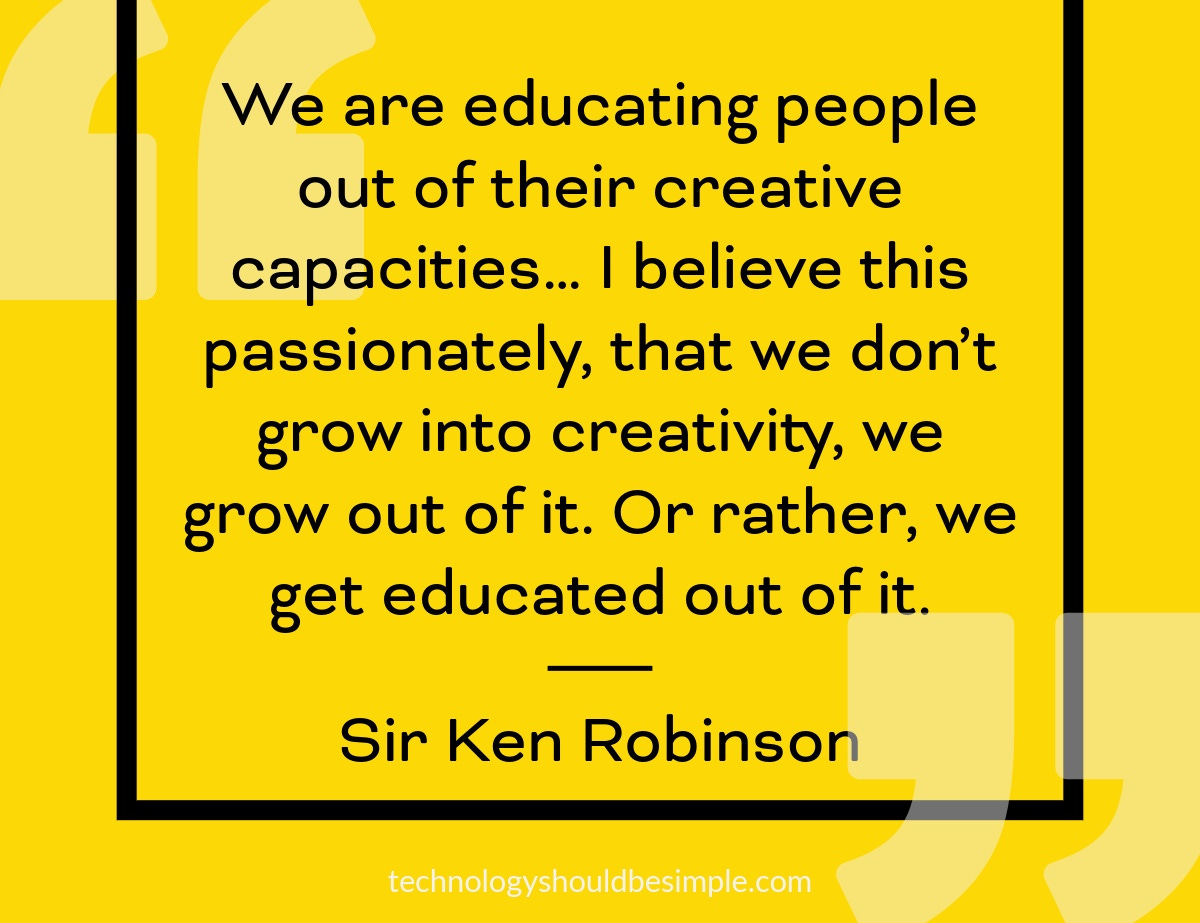
This quote comes from a 2006 TEDTalk, “Do Schools Kill Creativity?” by Sir Ken Robinson.
During the wiring of the book, CHOICE: Personalized Learning, Personalized Technology, I come across many quotes on education. Some of them showing up in the book.

And some of these quotes deserve extra attention. This is one of them.
Sir Ken Robinson is a British author and advisor to governments on arts policy. His TEDTalk has become the platform’s most-viewed presentation with over 80 million views.
He argues that schools systematically stigmatize mistakes (which kills experimentation), prioritize academic subjects over arts and creativity, and treat different thinking as a defect rather than an asset. He’s written and published several other works on this topic, including his book, Creative Schools.
To put the quote in some context, here is a longer excerpt from the TEDTalk.
What these things have in common is that kids will take a chance. If they don’t know, they’ll have a go. Am I right? They’re not frightened of being wrong.
I don’t mean to say that being wrong is the same thing as being creative. What we do know is, if you’re not prepared to be wrong, you’ll never come up with anything original -- if you’re not prepared to be wrong. And by the time they get to be adults, most kids have lost that capacity. They have become frightened of being wrong. And we run our companies like this. We stigmatize mistakes. And we’re now running national education systems where mistakes are the worst thing you can make. And the result is that we are educating people out of their creative capacities.
Picasso once said this, he said that all children are born artists. The problem is to remain an artist as we grow up. I believe this passionately, that we don’t grow into creativity, we grow out of it. Or rather, we get educated out of it. So why is this?
If you haven’t heard the entire talk before, I highly recommend watching/listening to it. Sir Robinson is very entertaining in the way he presents this information.
This post was a small detour in the chapters on CHOICE: Personalized Learning, Personalized Technology. If you want to follow along and support the book, please subscribe below.